
If someone has mentioned neurofeedback therapy to you, or you’ve been researching options for a child who can’t sit still, a teenager who can’t sleep, or your own stubborn anxiety, you’ve probably run into two very different versions of it online. One makes it sound like science fiction. The other makes it sound like a miracle. Neither is accurate, and neither helps you decide anything.
So here’s the honest version: what neurofeedback actually is, what happens in a session, who tends to benefit, what the research does and doesn’t show, and how to figure out whether it’s worth exploring for your family.
The Short Answer
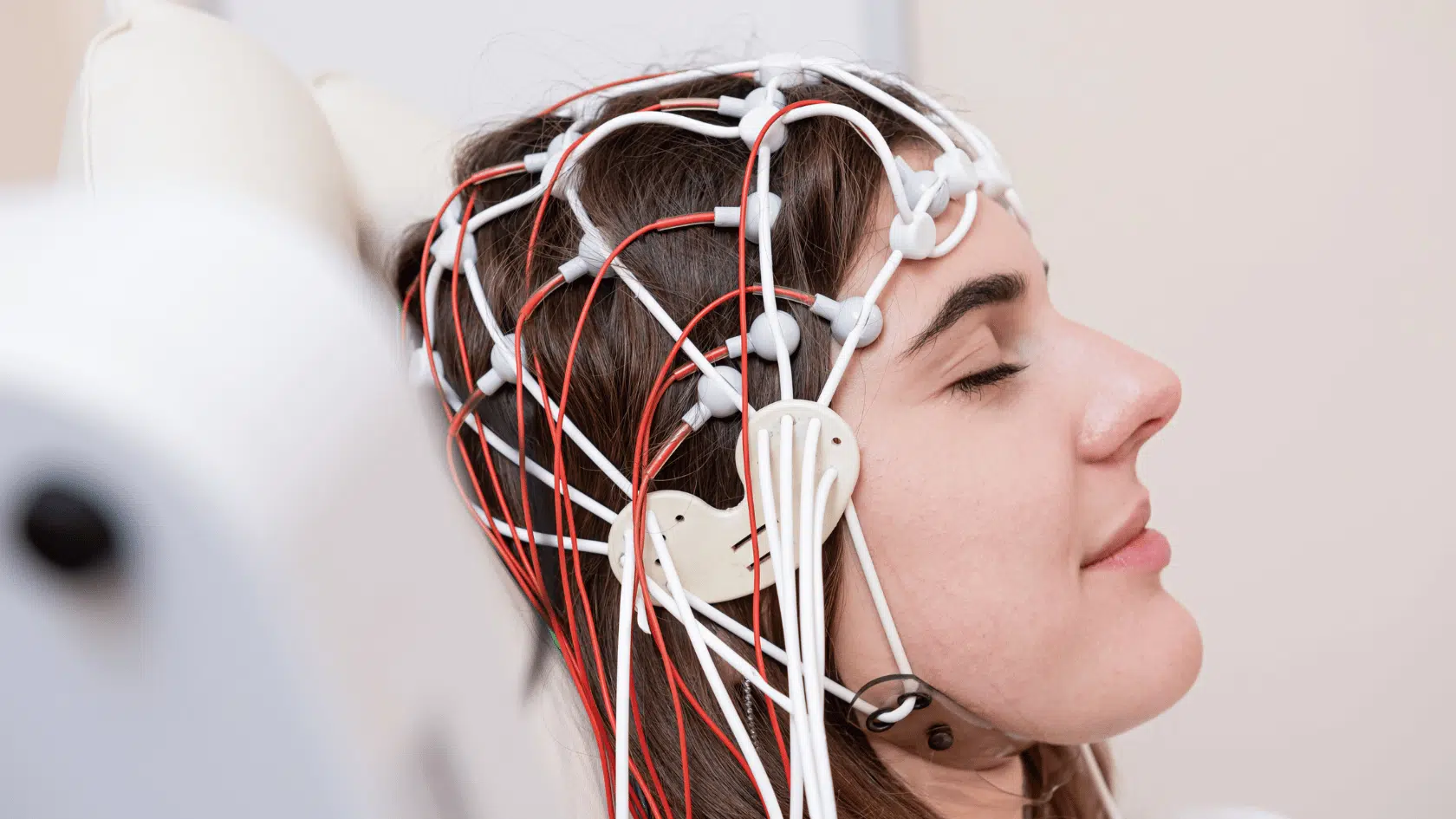
Neurofeedback, also called EEG biofeedback, is a form of training that helps the brain learn to regulate itself more efficiently. Small sensors placed on the scalp observe your brainwave activity. A computer reads that activity and reflects it back to you in real time, usually through a video game, movie, or sound that responds to what your brain is doing. Over many sessions, the brain gradually learns to favor more balanced, regulated patterns.
Two things worth saying immediately, because they’re what people worry about most: the sensors only listen. Nothing is sent into your brain. There’s no current, no shock, no medication, and nothing invasive about it. You sit in a comfortable chair and watch a screen.
How Does Neurofeedback Work?
Think about learning to keep your balance on a bicycle. Nobody taught you the physics. Your body got instant feedback — wobble, correct, wobble, correct — and eventually your nervous system learned the pattern without you having to think about it at all.
Neurofeedback works on the same principle, applied to brain activity.
Your brain produces electrical activity at different frequencies all the time. Some patterns are associated with alert focus, others with drowsiness, others with the wired, restless state that makes it hard to settle. Under normal circumstances, you have no way of knowing what your brain is doing moment to moment, so you can’t adjust it deliberately.
Neurofeedback creates that missing feedback loop. The sensors pick up the activity, the computer sorts out the frequencies your counselor is targeting, and the screen responds. When your brain moves toward the pattern you’re training for, the game runs smoothly or the movie plays clearly. When it drifts, the feedback dims or pauses. Nobody is telling you how to do it, and there’s nothing to figure out consciously. Your brain notices what produces the reward and, over repeated sessions, moves that direction on its own.
This is why neurofeedback is described as brain training therapy rather than treatment in the usual sense. It’s a learning process, which is also why it takes a series of sessions rather than one dramatic appointment. Nobody learns to ride a bike in a single afternoon.
The frequencies targeted and the specific sensor placements are tailored to each person and their goals, which is part of why an initial assessment matters so much.
What to Expect in a Neurofeedback Session
Here’s the practical walkthrough, because the unfamiliar parts are usually what keep people from calling.
Before you start, there’s a conversation. You’ll talk through your history, your goals, and what else is going on, so your counselor can tell you honestly whether neurofeedback makes sense as part of your care, and which approach fits. At Redeemed Life, that conversation is a free phone consultation, so you can ask questions before committing to anything.
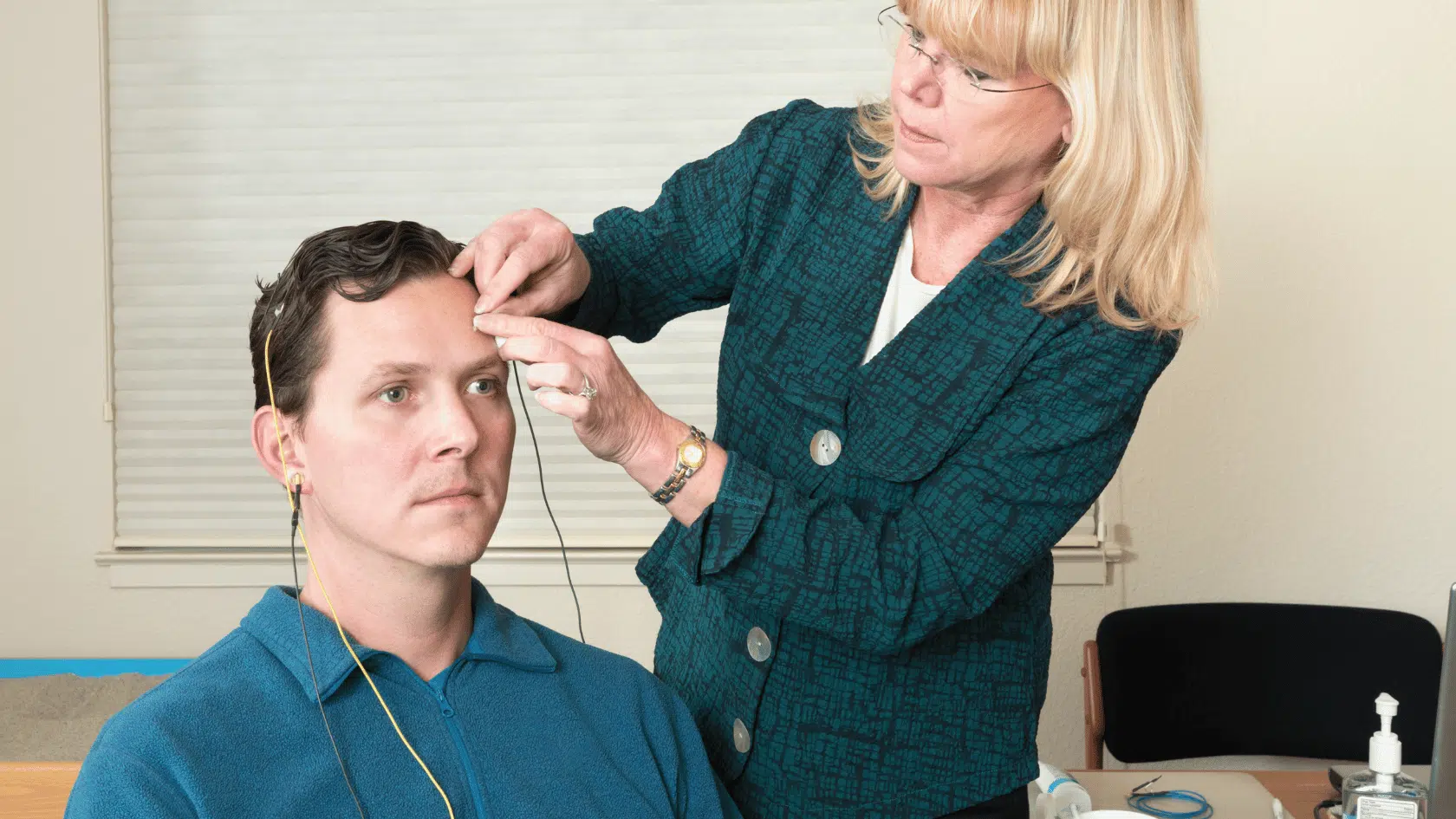
Setup takes a few minutes. Your counselor places small sensors on your scalp, usually with a bit of conductive paste that washes out easily. It doesn’t hurt. Kids are often surprised by how boring this part is, in the best possible way.
Then you sit and watch. You’ll see a game, an animation, or a movie. Your job is essentially nothing. You don’t concentrate hard, solve anything, or try to make it work. Trying too hard actually gets in the way. Most people find it relaxing, and some find it slightly dull, which is fine.
The session itself is short. Training sessions are typically much shorter than a full counseling hour. Your counselor will confirm the specifics for your plan.
You repeat it. This is the part worth understanding up front: neurofeedback is cumulative. Changes usually show up gradually across a series of sessions, and your counselor will lay out a realistic plan and check progress along the way rather than leaving you guessing.
Afterward, you go about your day. There’s no recovery period. Some people feel calm or a little tired after early sessions, and your counselor will want to hear about it either way, since that feedback helps shape the training.
Who Neurofeedback Tends to Help
At Redeemed Life, people generally explore neurofeedback as a complementary support for:
- Attention and focus challenges, including ADD and ADHD, as part of a broader support plan
- Chronic stress and anxiety, especially the kind that leaves you exhausted and overwhelmed
- Sleep difficulties
- Teens navigating anxiety, low mood, or stress, alongside comprehensive care
- Athletes and professionals wanting support for concentration and emotional regulation
- Adults who want to support healthy brain function and self-regulation as they age
You’ll notice the careful wording there. That’s deliberate, and the next section explains why.
What the Research Actually Says
Most pages about neurofeedback for ADHD skip this part or quietly pick the flattering studies. We’d rather you hear it straight.
Neurofeedback has been studied for decades, most heavily for ADHD, and the results are genuinely mixed. When parents or clinicians who know a child is receiving training rate that child’s symptoms, improvements consistently show up. When the raters are blinded — teachers or evaluators who don’t know who received real training versus a sham version — those differences shrink substantially or disappear. A large systematic review published in JAMA Psychiatry found no group-level evidence supporting neurofeedback as a stand-alone treatment for ADHD on blinded measures. Other researchers argue that the studies vary so widely in protocol, session count, and quality that the field hasn’t yet run the trial that would settle it.
So what do we actually make of that?
We think neurofeedback is worth considering as one part of a broader plan, not as a replacement for treatments with stronger evidence behind them. We won’t tell you it’s proven, because it isn’t. We won’t tell you it will let your child stop taking medication, because that decision belongs to you and your prescribing physician, never to us. And we’d gently encourage you to be cautious with any provider who promises otherwise, or who suggests dropping established care in favor of brain training.
What we can tell you is that many of our clients have found it a helpful support alongside counseling, that it’s non-invasive and drug-free, and that we’ll be honest with you at every step about what we’re seeing.
It Isn’t a Cure, and It Isn’t a Standalone
Neurofeedback doesn’t cure any medical or psychological condition, and it works best woven into care that addresses the whole picture. Focus problems in a child may be about attention regulation, and they may also be about anxiety, a learning difference, sleep, grief, or something that happened at school that nobody knows about yet.
That’s why neurofeedback usually sits alongside other work: child and adolescent counseling for younger clients, individual counseling for adults, or trauma-focused approaches like EMDR, Brainspotting, or broader trauma therapy when past experiences are part of what’s keeping a nervous system on high alert.
We also coordinate with your physician. If you or your child takes medication, please keep your prescriber informed about neurofeedback training. We’ll never recommend changing or stopping medication on our own.
For Parents Especially
If you’re the one researching this at eleven at night, we want to say something directly to you.
A lot of parents arrive at neurofeedback after a long stretch of feeling like they’re failing. The school keeps calling. The homework battle takes two hours. You’ve tried charts, apps, consequences, rewards, and the advice of every well-meaning person in your life, and your child is still struggling, and somewhere in there you started to wonder whether this is somehow your fault.
It isn’t. A dysregulated nervous system is not a discipline problem and it is not a parenting verdict. Whether or not neurofeedback turns out to be part of your answer, an honest assessment with someone who knows what they’re looking at is worth having. If depression or anxiety may also be in the picture, our articles on the warning signs of depression in teenagers and teen social anxiety may help you sort out what you’re seeing.
A Word About Faith and Brain Care
For families who hold their faith closely, there’s sometimes an unspoken question underneath all this: should we be handling this spiritually instead?
We don’t think it’s an either/or. The brain is part of the body God made, and caring for it is no different in kind from setting a broken bone or treating an infection. Scripture tells us we’re fearfully and wonderfully made, and that includes the nervous system that keeps a child’s body braced when it can’t calm down on its own. Tending to that isn’t a lack of faith. For many families, it’s what finally frees up room for everything else, including prayer, connection, and peace at the dinner table.
If you’d like faith woven into your family’s care, our counselors do that through Christian-based direction and faith-integrated counseling. If you’d rather not, that’s respected fully, and no one will push.
Neurofeedback in Argyle, TX at Redeemed Life Counseling

Neurofeedback is one of the approaches we offer from our Argyle office. Courtney Osborne, LPC incorporates neurofeedback in her work with children, adolescents, and families, and Kendal Rice, LPC, CAS uses it in supporting young people with autism, ADHD, and behavioral challenges.
We’ve served Argyle and Denton County for more than twenty years and have been named Best of Denton County six years running. Every plan we build is personalized, coordinated with your other providers, and explained to you in plain language, because you shouldn’t have to take anyone’s word for what’s happening with your own brain or your child’s.
Start With a Conversation
You don’t have to decide about neurofeedback today. You don’t need a diagnosis, a theory, or the right vocabulary. You just need somewhere to start.
A free phone consultation is the simplest first step: tell us what’s going on, and we’ll give you an honest read on whether neurofeedback fits, whether something else would serve you better, or whether the two work best together. You can browse our counselors, review our insurance information, schedule a session online, or contact us with questions first. You’re also always welcome to call (940) 222-8552.
Whatever you’re carrying, or watching your child carry, you don’t have to sort it out alone.
