

Most people who put off counseling don’t skip it because they’re fine. They skip it because starting feels hard. Booking a first counseling session can feel like admitting something is wrong. Picturing the waiting room, the questions and the stranger across from you can be enough to close the browser tab.
If that’s where you are, you’re in good company. And here’s something worth hearing from someone who has been there. For many people, the hardest part is the first step through the door. After that, it gets easier.
Nervous the First Time? So Was She.
About three years ago, a woman went looking online for a Christian counselor and found Redeemed Life Counseling. She was dealing with anxiety and depression, and her marriage was going through a hard season. She knew she needed to talk to someone.
She’s open about how nervous she was before her first visit. She also says the nerves faded fast. Her counselor put her at ease, and she was able to open up and talk honestly from that very first session.
That’s a common experience. The fear before a first session is usually bigger than the session itself. You don’t need a script or the right words. A good counselor will help you get started, go at your pace and let you decide what you’re ready to share.
What to Expect at Your First Therapy Session

A lot of the fear around starting counseling is fear of the unknown. Here’s what usually happens.
- You reach out. Call 940-222-8552 or send a request through our online scheduling page. We don’t take insurance, but we can give you a superbill if you’d like to check your out-of-network benefits. See our insurance information page. We aim to reply the same day, and requests sent after 5 p.m. get a reply the next morning.
- You find the right counselor. Our office will ask a few questions about what you need and when you’re free, then suggest counselors who fit. You can also look through our counselors and ask for someone specific.
- You fill out intake forms. You’ll complete them online before your first appointment. They cover the basics, like contact details, a little background and consent to counseling.
- You talk. Your counselor will likely ask what brought you in, what has been hard lately and what you hope will change. A first session usually runs 1 to 2 hours. You don’t have to tell your whole story at once.
- You plan next steps together. By the end, you’ll usually have a sense of how often to meet and what you’ll work on first.
Prefer to start from home? We also offer online and phone counseling.
When One Person Starts, the Whole Family Can Feel It
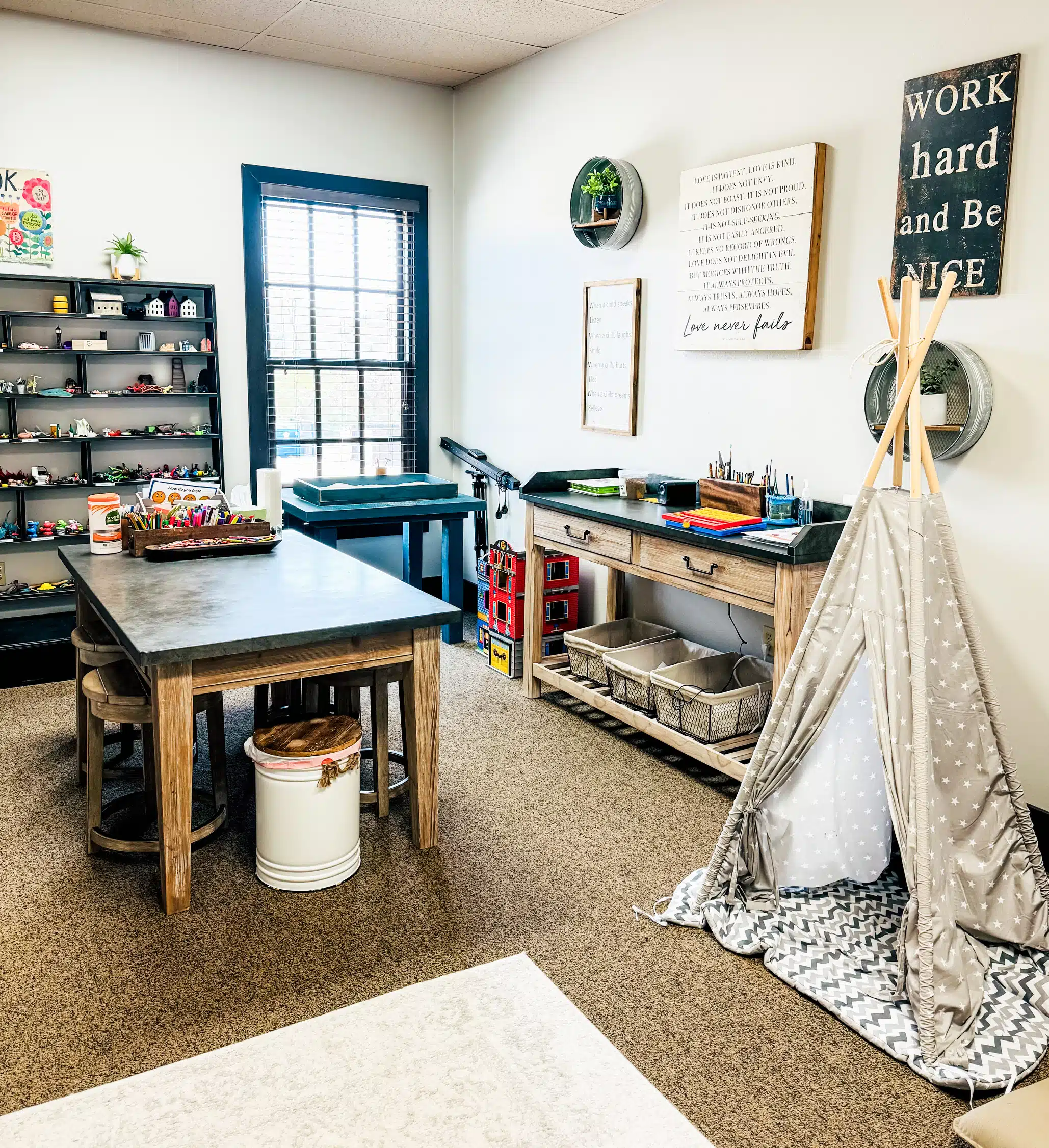
Her story didn’t stop with her. Counseling had helped her own anxiety so much that, when her kids began struggling with anxiety too, she brought them in. She has said she wishes she’d had that kind of help at their age. Today her kids have practical tools they can use on their own when stress builds up.
She and her husband also came in for marriage counseling. They describe themselves as complete opposites who communicate in very different ways. Counseling helped them understand each other instead of talking past each other. Over time, they came to see their differences as a strength, with each one pulling the other in good directions.
She’s honest about a harder lesson too. It’s easy to believe a struggling marriage is the other person’s fault. Realizing she played a part was humbling, and she says it was also where things started to change.
If you’re a parent, your own healing can shape how your kids learn to handle hard feelings. If you’re married, one person taking the first step can open the door for both of you. We offer counseling for children and teens and couples and marriage counseling. If you’re curious what that looks like, read what to expect from couples counseling.
You Don’t Need a Major Trauma to Deserve Support
A lot of people hold off because their problems don’t feel “bad enough.” Someone else has it worse, so they think they should be able to handle this on their own.
Her advice speaks right to that. Even without a major trauma, having a safe place to go and talk openly can help a great deal. Most people are carrying something. And struggles like anxiety and depression aren’t things you can simply snap out of with willpower.
Counseling isn’t only for a crisis. Many people use it to work through stress, sort out a relationship or get support through a season that feels heavy. If you’re not sure, our guide to the signs you or your teen might benefit from counseling can help you think it through.
Why Waiting Usually Makes It Harder
There’s rarely a perfect time to start. Life stays busy, and it’s easy to tell yourself you’ll call when things calm down.
Looking back, she says the longer you wait, the harder that call becomes. Putting it off doesn’t make the first step smaller. It just pushes it further away.
This isn’t meant to rush you. Think of it as an invitation to take the step while it’s on your mind.
Questions People Ask Before Their First Session
Do I need to know what to say? No. Plenty of people start with “I’m not sure where to begin.” Your counselor will guide the conversation.
Is what I share kept private? Yes, with a few legal and safety exceptions. Your counselor will walk you through them at the start.
Do I have to be a Christian to come here? No. Our counselors are licensed, clinically trained therapists who use evidence-based counseling methods. Many clients ask us to bring faith, prayer and Scripture into their sessions, and we’re glad to when you ask. If you’d rather leave faith out entirely, that’s completely fine. Learn more about our Christian-Based Direction.
What if my counselor isn’t the right fit? It’s okay to say so, at any time. Tell your counselor or our office, and we’ll help you find someone who fits better. It happens, and it’s no problem.
Your Next Step
The hardest part really is walking through the door. Once you’re in, you’re not doing this alone.
For this family, what waited on the other side was happier kids who know how to handle stress, and a marriage that is stronger than it has ever been. Life still has bumps. The difference is they know where to go when they hit one.
If you’ve been thinking about counseling for yourself, your kids or your marriage, make the call. Request an appointment or call 940-222-8552. You can also contact us with questions first, or read more about our counseling services.
If you’re in crisis or thinking about harming yourself, call or text 988 to reach the Suicide & Crisis Lifeline, or call 911. Counseling is not an emergency service.
Written by Michelle Fitzhugh, MA, NCC, LPC-S. Reviewed by Michelle Fitzhugh, MA, NCC, LPC-S
